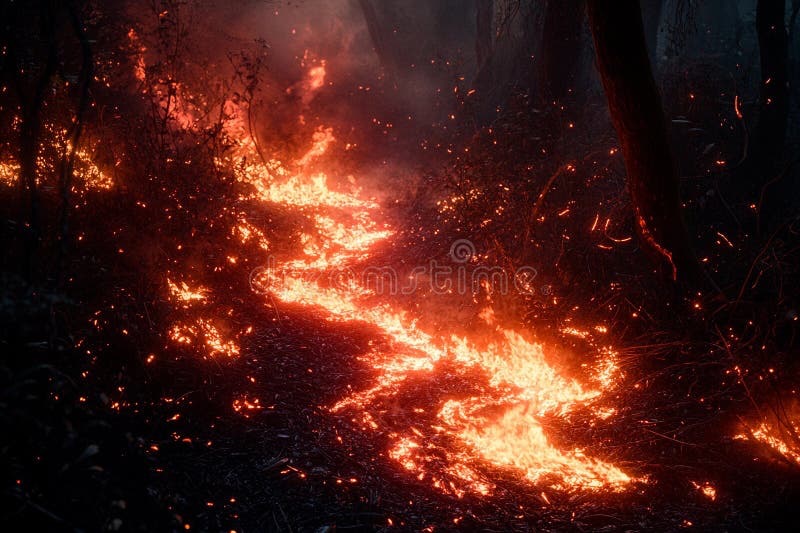
When most people think about wildfires, they imagine a large wall of flames moving through an area and burning everything in its path. In reality, many homes are not lost from the main fire front, but from wind-blown embers that can travel long distances ahead of the fire.
During major wildfires, burning embers can be carried by wind for a mile or more. These embers land on roofs, in gutters, in roof valleys, under decks, in landscaping, or against fences and walls. If they land in dry leaves, mulch, or other combustible materials, they can start small fires that eventually ignite the home.
This is why firefighters and wildfire experts often say that embers are the number one reason homes are lost in wildfires.
Some of the most common places embers cause problems are:
- Leaves and pine needles in gutters
- Debris in roof valleys
- Bark mulch next to the house
- Plants or shrubs touching the house
- The space under decks and patios
- Firewood stacked against walls
- Outdoor cushions and doormats
- Attic and foundation vents without screens
- Wood fences connected directly to the house
The good news is that many of these risks can be reduced with relatively simple maintenance and small improvements around the home.
The goal is not to eliminate all risk, which is impossible, but to reduce the number of places where embers can start a fire. When many homes in a neighborhood take these kinds of steps, it can make a big difference in whether a wildfire spreads through a community.
Leave a Reply
You must be logged in to post a comment.